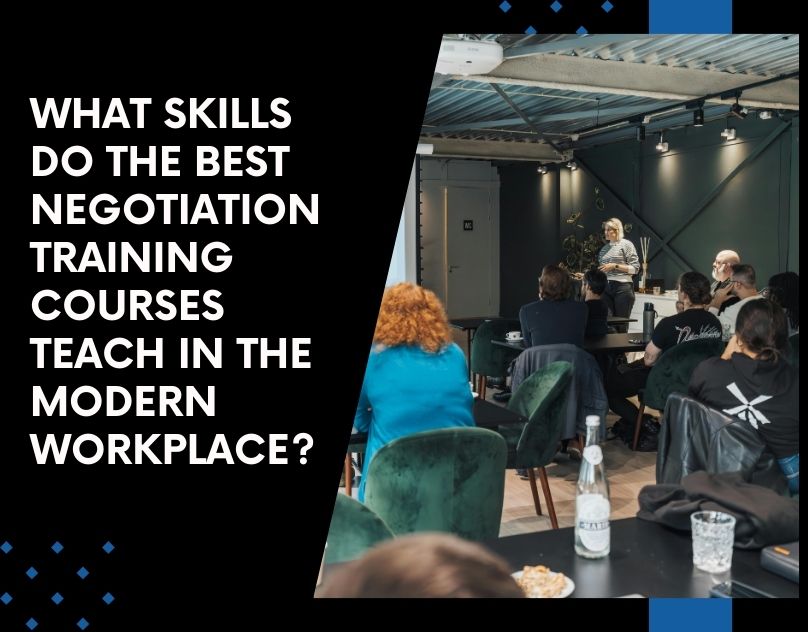
Workplaces today look very different from what they were even a decade ago. There are hybrid offices, multicultural teams, multiple cycles of decision making faster than we know what to do with, and we need the communication skills to be stronger than ever. In the center of solid communication is negotiation. The best Negotiation Training will do more than show people how to “win” an argument. Negotiation Training will prepare professionals to establish trust, handle conflict, and ultimately arrive at a lasting solution.
So what, exactly, do these Negotiation Training courses teach that are so relevant within today’s modern workplace? Let’s break down the essential components.
1. Listening Beyond the Words
Most people think negotiation is about talking, persuading, or presenting the facts. Practiced negotiators know it all begins with listening. The best Negotiation Training courses will teach participants, as one of their many skills, not to miss the hidden signs. Not only will a successful negotiator hear what the other person is saying, but they will also be able to pick up on unspoken signals, read body language/tone of voice, and identify emotions underneath the words.
2. Building Bridges, Not Walls
Those days are over when negotiations were about winning and losing. Today, workplaces live in collaboration, not conflict. That’s why the finest programs focus on building relationships. These classes teach employees how to look for common ground and frame solutions that benefit both parties. Rather than closing the door on someone else’s idea, people learn how to build value into it. This doesn’t merely fix immediate problems—it reinforces long-term working relationships. Over time, it’s these solid bridges that make teams stay motivated and workplaces harmonious.
3. Managing Emotions in High-Stakes Conversations
Emotions often run high during negotiation. Whether requesting a promotion, negotiating a client’s disagreement, or setting deadlines, feelings like frustration, fear and excitement can lead to clouded judgment.
Negotiation Training courses focus on emotional intelligence. Teams learn how to know their own triggers and stay calm. Equally important is how to respond to others’ emotions with empathy. Rather than instinctively defending against the emotions of someone else, trained negotiators learn to pause, reframe the conversation and turn a heated moment into a productive discussion.
4. The Art of Persuasion Without Pressure
People often confuse persuasion with the ability to persuade others, when it is more aimed at influence. Persuasion is not about talking louder or providing additional evidence with piles of data. It is about having enough influence to guide others to see the value in your point of view.
Excellent negotiation training courses teach people how to employ storytelling, relatable examples and logic to not create pressure but establish trust. When the employee develops this level of mastery, they can pitch ideas/approaches, raise objections and negotiate confidently without leaving the other side feeling cornered.
5. Flexibility and Creativity for Problem Solving
In fast-changing workplaces, sticking rigidly to one idea rarely works. Modern negotiations embrace flexibility and creativity. The best courses show employees how to think quickly during negotiations, explore brainstorming options for alternatives and modify plans as the situation changes over time.
6. Confidence without Aggression
Negotiation strikes a balance. Being too passive means you are going to lose out, while being too aggressive risks damaging a relationship. The best training options teach professionals how to be confident, which is not to be confused with aggression.
Techniques like setting boundaries, stating your needs in a firm manner, and standing by important points while still respecting the other side. This confidence allows employees the latitude to negotiate fairly, negotiate for better roles, and negotiate for reasonable workloads and shifts, without the fear of backlash.
The Importance of These Skills Today
In today’s workplaces, miscommunication is often the biggest block. When employees talk past each other, they waste time, productivity, trust and credibility. When employees have negotiation skills, they can bring clarity and cooperation to the process and communication.
Picture a workplace where every employee is skilled at active listening, staying calm, and looking for win-win opportunities. Conflict diminishes, innovation increases, and morale rises. Investing in Negotiation Training courses is not just about negotiating but about building a culture where communication is productive.
Conclusion
The best negotiation courses don’t teach games or hard-sell. Negotiation Training Courses Boost Workplace Communication. They create strong communicators, problem solvers and bridge-builders. They assist professionals in navigating difficult conversations with empathy and clarity. In a rapidly changing world, where collaboration is becoming key, these behaviours are essential.
The next time you think about professional development, just remember that learning how to negotiate well might be the most powerful thing you can do for your career!