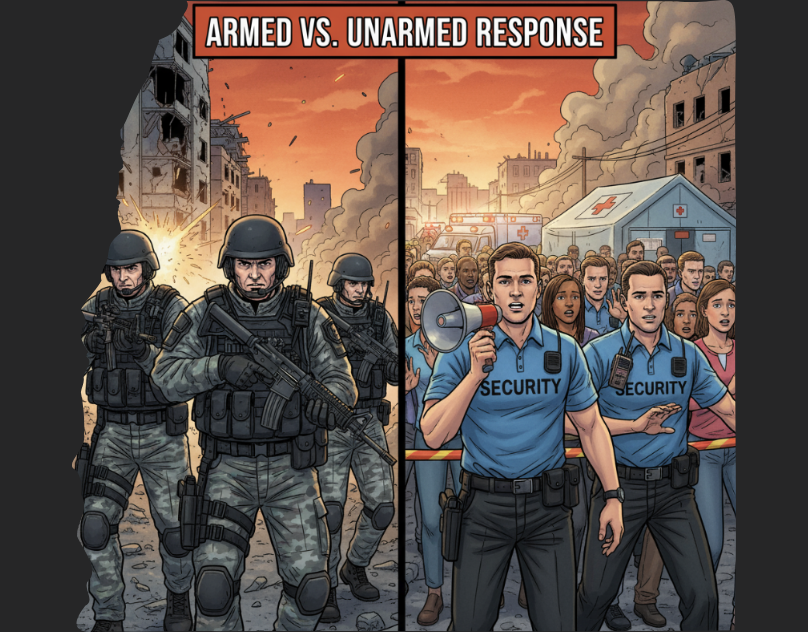
When businesses and property owners in West Covina consider their security options, understanding the fundamental differences between armed security guards and unarmed personnel becomes crucial. The distinction goes far beyond simply carrying a weapon. Emergency response protocols, training requirements, and tactical approaches vary significantly between these two types of security professionals. This comprehensive guide examines how armed security teams handle critical situations differently from their unarmed counterparts.
Understanding the Basic Distinctions
Security services operate on different levels of authority and capability. Unarmed guards primarily focus on observation, reporting, and deterrence through presence. In contrast, professionals from an armed security guard company receive extensive training in threat assessment, weapons handling, and active intervention strategies.
The presence of firearms fundamentally changes how security personnel can respond to threats. However, this doesn’t mean armed guards automatically resort to force. Instead, they possess additional tools and training that allow for graduated responses based on threat levels.
Training Differences That Shape Emergency Response
Weapons Proficiency and Safety Protocols
Armed security guard services require personnel to complete rigorous firearms training programs. These programs typically include:
- Regular qualification shoots to maintain accuracy
- Weapon retention techniques to prevent disarming
- Legal frameworks governing the use of force
- De-escalation tactics specific to armed encounters
- Shoot/don’t shoot scenario training
Meanwhile, unarmed guards focus their training on communication skills, conflict resolution, and knowing when to contact law enforcement. Their training emphasizes avoidance and reporting rather than direct intervention.
Threat Assessment Capabilities
Armed personnel develop heightened situational awareness through their training. They learn to identify potential threats earlier and assess danger levels more accurately. This advanced threat recognition allows them to position themselves strategically and prepare appropriate responses before situations escalate.
Unarmed guards also receive threat assessment training, but their response options remain limited. Once they identify a serious threat, their primary responsibility involves alerting authorities and ensuring their own safety while monitoring the situation.
Emergency Response Protocols: A Comparative Analysis
Active Shooter Situations
The most significant difference emerges during active shooter scenarios. Unarmed security personnel follow evacuation and lockdown procedures, helping people escape while contacting law enforcement. Their role focuses on minimizing casualties through crowd management and information gathering.
Conversely, armed security professionals may engage the threat directly if circumstances warrant. Their training includes:
- Tactical positioning and cover utilization
- Coordinating with responding police officers
- Neutralizing active threats when immediate action prevents loss of life
- Securing perimeters after threat neutralization
This doesn’t mean armed guards recklessly engage every threat. They carefully evaluate whether the intervention serves the greater good or if evacuation remains the safer option.
Medical Emergencies and Non-Violent Incidents
Interestingly, both armed and unarmed guards often respond similarly to medical emergencies, fires, or natural disasters. Both receive first aid training and emergency coordination skills. The weapon becomes irrelevant when assisting someone having a heart attack or evacuating a building during a fire alarm.
However, armed guards bring additional value during medical emergencies in dangerous areas. They can secure the scene while providing aid, ensuring that first responders can work safely upon arrival.
Property Crimes and Theft Prevention
When confronting shoplifters, trespassers, or vandals, response strategies differ considerably. Unarmed guards typically observe, document, and report these incidents. They may verbally challenge suspects but avoid physical confrontation unless necessary for self-defense.
An armed security guard company trains its personnel to assess whether a property crime escalates into a violent threat. Armed guards can provide credible deterrence that often prevents crimes from escalating. Their presence signals serious consequences, which frequently causes criminals to surrender peacefully or flee without confrontation.
Legal Authority and Liability Considerations
Armed and unarmed guards operate under different legal frameworks. Armed personnel carry significantly greater legal responsibility for their actions. Every decision to draw a weapon, point it at someone, or discharge it faces intense legal scrutiny.
This heightened accountability actually makes many armed guards more cautious than people expect. They understand that inappropriate weapon use can result in criminal charges, civil lawsuits, and loss of licensure. Therefore, they often exhaust verbal commands and non-lethal options before considering force.
Unarmed guards face fewer legal complications but also possess limited legal authority to detain or physically intervene. Their testimony and documentation become their primary tools for ensuring accountability after incidents occur.
Cost-Benefit Analysis for Different Scenarios
High-Risk Environments
Locations with valuable assets, previous violent incidents, or high-crime surroundings clearly benefit from armed security guard services. Banks, jewelry stores, executive protection details, and facilities in dangerous neighborhoods require the enhanced response capabilities that armed personnel provide.
Low-Risk Settings
Office buildings, retail stores in safe neighborhoods, and residential communities often find unarmed guards sufficient. These environments need visual deterrence and professional monitoring more than tactical response capabilities.
The cost difference between armed and unarmed services can be substantial, sometimes 30-50% higher for armed personnel. Property owners must weigh this investment against their actual risk profile.
Communication and Coordination with Law Enforcement
Both types of security professionals coordinate with police, but armed guards require more sophisticated protocols. Law enforcement needs to know that armed security is on-site when responding to emergencies to prevent tragic friendly fire incidents.
Armed guards receive training in:
- Identifying themselves to responding officers
- Securing weapons when police arrive
- Providing tactical information about threats
- Transitioning command to law enforcement seamlessly
This coordination proves critical during chaotic emergencies when split-second identification determines outcomes.
Technology Integration in Modern Security Response
Contemporary security services increasingly rely on technology regardless of armed status. Surveillance systems, alarm integration, and communication networks enhance both armed and unarmed response capabilities.
However, armed teams often utilize additional tactical technology, including body armor, advanced communication systems, and real-time threat intelligence platforms. These tools enhance their ability to respond effectively while minimizing risk to themselves and others.
Can armed security guards make arrests?
Security guards, whether armed or unarmed, generally have the same arrest authority as private citizens. They can perform citizen’s arrests for crimes committed in their presence, but they must follow specific legal procedures. Armed status doesn’t grant additional arrest powers, though it may provide practical advantages in detaining dangerous individuals until police arrive.
How often do armed security guards actually use their weapons?
Weapon discharge by armed security remains extremely rare. Most armed guards complete entire careers without firing a weapon outside of training. The weapon serves primarily as a deterrent and last-resort tool. Proper training emphasizes exhausting all other options before considering lethal force.
Are armed guards required in West Covina for certain businesses?
West Covina doesn’t mandate armed security for most businesses. However, certain high-risk operations may require enhanced security as part of their business licensing or insurance requirements. Local regulations and industry-specific requirements vary, so businesses should consult with security professionals and local authorities.
What happens if an armed guard responds incorrectly to an emergency?
Inappropriate response by armed security can result in criminal charges, civil liability, termination, and license revocation. Both the individual guard and their employing company may face legal consequences. This accountability structure motivates proper training and careful decision-making during emergencies.
Do armed guards prevent more crimes than unarmed guards?
Research shows mixed results. Armed security provides stronger deterrence for violent crimes and serious property crimes. However, skilled unarmed guards often prevent crimes effectively through vigilant observation, relationship building, and proactive intervention. The environment and specific threats matter more than armed status alone.
Check out this post to discover how armed security guards keep risks under control