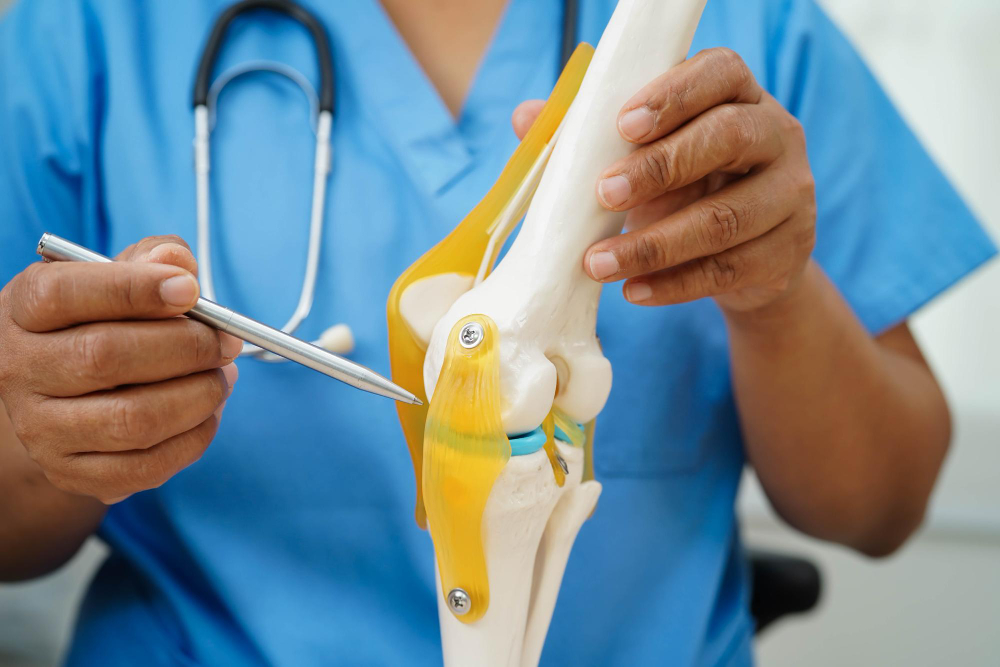
Knee pain can drastically change the way you live. Whether it’s difficulty climbing stairs, walking long distances, or simply enjoying your favourite activities, knee problems can hold you back. Surgery on the knee can be the answer for many. However, the question is- which is better: partial knee replacement or total knee replacement?
In case you are planning surgery and doing research on the right procedure, it is necessary to know the difference between these two procedures. You can choose wisely, having an experienced orthopedic specialist in Ahmedabad, such as Dr. Hardik Padhiyar, and make a decision that best suits your lifestyle and long-term well-being.
Understanding Knee Replacement Surgery
Knee replacement surgery, or Knee Arthroplasty, is undertaken to relieve pain and restore the functions of the damaged knees. It involves the substitution of the worn-out or diseased part of the knee joint with artificial implants. The amount of damage dictates the type of knee replacement that doctors can offer to the patient: the total knee replacement or the partial knee replacement.
The two surgeries are carried out with a view to lessening pain, improving mobility, and guaranteeing patients live well again.. Nevertheless, the most appropriate procedure varies according to your condition, age, activity level, and health.
What is Partial Knee Replacement?
In a partial knee the only part of the knee that is involved in the replacement is the damaged part of the knee. This is a process that is best used in patients whose knee arthritis/ damage has not severely affected other knee compartments.
Important Tidbits on Partial Knee Replacement:
- Not as invasive as total knee replacement.
- Faster healing and reduction in hospitalisation.
- Does not remove as much of the natural bone and ligaments.
- Gives a more natural movement of the knee after surgery.
- Appropriate with younger active patients who have an injury to a single knee part.
What is Total Knee Replacement?
A total knee replacement involves replacing the entire knee joint—covering the inner, outer, and front compartments. This is recommended for patients with widespread arthritis or severe joint damage.
Key Points About Total Knee Replacement:
- Replaces all compartments of the knee.
- Offers long-lasting pain relief for advanced arthritis.
- Suitable for patients with severe damage and chronic pain.
- Higher success rate in terms of durability and longevity.
- Requires a slightly longer recovery time compared to partial replacement.
Comparing Partial vs. Total Knee Replacement
Choosing between partial and total knee replacement can feel overwhelming. Here’s a direct comparison to help you understand better:
| Aspect | Partial Knee Replacement | Total Knee Replacement |
| Extent of Surgery | Replaces one compartment | Replaces the entire joint |
| Recovery Time | Faster, usually 4–6 weeks | Longer, around 8–12 weeks |
| Natural Feel | Closer to natural knee movement | Less natural, but stable and durable |
| Pain Relief | Effective if damage is localized | Effective for widespread damage |
| Implant Longevity | May need revision earlier | Lasts longer in most cases |
| Ideal Patient | Younger, active, limited arthritis | Older, severe arthritis, or extensive damage |
Factors to Consider When Choosing
Every patient’s situation is unique. Here are the main factors your orthopedic near you will assess before suggesting the right procedure:
- Level of Damage: When the damage or arthritis is in one area, partial replacement can suffice. In case the entire knee is involved, complete replacement is advised.
- Age and Level of Activity: Younger and more active patients are usually the ones who are helped by partial replacement because it is more natural to the knee.
- Long-Term Objective: In case the durability and reduced opportunities of revision are the priorities, total replacement can be a safer option.
- Recovery Expectations: With the partial replacement, the recovery will take a shorter time, whereas in total replacement, the results will last longer, but it will take a longer time to be performed.
- Overall Health: Other health conditions can advise patients to take one of the options based on safety and possibilities of recovery.
Partial Knee Replacement Advantages.
- Reduced incision, which results in a decrease in post-surgery pain.
- Shorter recovery time for everyday and sports.
- Has a greater natural knee movement.
Total Knee Replacement Advantages.
- applicable to general arthritis or joint destruction.
- Potent analgesic and improves movement.
- Implants are long-lasting and are projected to last 15-20 years or more.
- Reduced risk of a second operation as compared to partial replacement.
Risks and Limitations
Knee replacements are associated with certain risks, as with all surgeries. Although complications are not frequent, patients need to know about them:
- Risks of partial Knee Replacement: There is a risk of arthritis of other compartments progressing and additional total knee replacement in the future.
- Total Knee Replacement Pros and Cons: It is a little riskier with recovery; however, it is more surgically invasive, yet has lower risks of do a second surgery in case it is done successfully.
Recovery and Rehabilitation
Recovery plays a key role in the success of knee replacement surgery.
- Partial Replacement Recovery: The majority of patients will be able to ambulate without assistance in 3-4 weeks. Rehabilitation is easier and faster
- Complete Recovery with Replacement: It might take a patient 6 weeks or longer to walk without aids. The use of physiotherapy is necessary for gaining strength and flexibility.
- Regardless of the form of operation, it is important to adhere to a rehabilitation program laid out by your doctor to restore full functionality in the knee.
Who Should You Consult?
When you are seeking an orthopedic specialist in Ahmedabad or searching for an orthopedic nearest to you, the most crucial thing will be to consult an experienced surgeon. The decision to select the appropriate procedure is not one of what is better overall; it is what is better for your knee, your age and your lifestyle.
As a reliable orthopedic care provider, Dr. Hardik Padhiyar has already assisted a lot of patients in recovering their active lifestyles through the right knee surgery options. His patient-centric approach guarantees you an individual treatment plan according to your condition.
Summary: The Right Choice.
Pain in the knee and joint damage is a chronic condition that can be treated successfully by both partial knee replacement and total knee replacement. This decision will be best based on the severity of the arthritis, your age, life objectives, and your health in general.
Local damage and a preferable fast healing with natural knee movement: partial knee replacement can be the correct answer. Total knee replacement can be more advantageous when you have serious damage to your knee and feel like you need relief in the long term.
Are you experiencing knee pain, but you do not know which treatment to take? You should consult Dr. Hardik Padhiyar, one of the most successful orthopedic surgeons near you. His experience in the field of partial and complete knee replacement offers you the best decision to make regarding your health and active living.
Take the first step toward a pain-free, mobile life. Schedule your consultation with Dr. Hardik Padhiyar today.