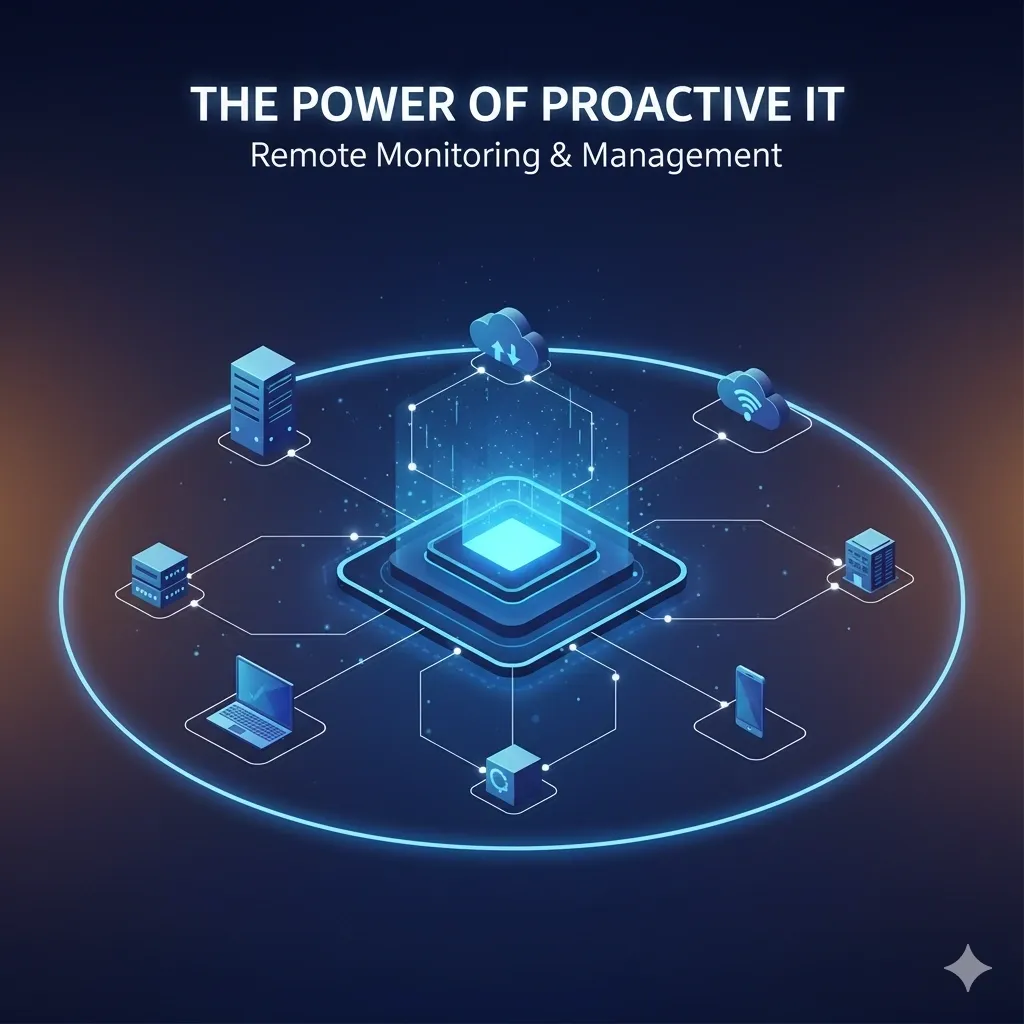
As businesses increasingly depend on complex digital infrastructure, efficient IT operations management has become absolutely crucial. Remote Monitoring and Management (RMM) is the essential technology that empowers IT teams to monitor, manage, and maintain systems remotely, ensuring peak performance, robust security, and unwavering reliability.
By adopting RMM, organizations can dramatically reduce costly downtime, slash operational expenses, and enhance overall efficiency. In essence, RMM is the fundamental foundation of a scalable, secure, and future-ready IT ecosystem.
What is Remote Monitoring and Management (RMM)?
Remote Monitoring and Management (RMM) is a powerful set of tools and processes that enable IT teams to remotely oversee and manage client systems, networks, and devices from a central location.
Its primary goal is to deliver proactive IT management by identifying and resolving potential issues before they impact business operations. Through RMM software, IT administrators can track the health of servers, workstations, and network devices in real-time, allowing them to perform necessary updates, deploy patches, and handle security incidents efficiently from anywhere.
Key Benefits of Implementing RMM
Implementing RMM is a strategic move that delivers clear, quantifiable advantages across your entire organization.
1. Massive Reduction in Downtime and Increased Uptime
RMM continuously monitors critical systems, detecting performance degradations or errors early. By enabling IT to resolve issues proactively, RMM minimizes costly downtime, ensuring critical systems remain online and highly reliable.
2. Significant Cost Savings
RMM drives efficiency by automating monitoring, patching, and routine maintenance. This reduces the need for constant manual tasks and expensive on-site visits. Furthermore, combining RMM with Compliance Management helps avoid regulatory penalties while significantly cutting operational expenses.
3. Scalability and Flexibility
- Easy Scaling: RMM platforms scale effortlessly to manage hundreds or even thousands of endpoints across multiple geographical sites.
- Support Distributed Teams: RMM fully supports modern, distributed teams and global offices through centralized, remote management, enabling seamless hybrid work.
4. Enhanced Security and Compliance
RMM continuously monitors for vulnerabilities, ensures all operating systems and third-party applications stay fully patched and secure, and maintains a tight security baseline across all devices.
5. Improved Business Continuity and Disaster Recovery
Automated backups and immediate remote access enable quick and efficient data recovery during unexpected hardware failure or security incidents. Continuous monitoring ensures potential system failures are detected early, minimizing data loss and downtime.
6. Proactive Maintenance and Prediction
RMM predicts and prevents failures through continuous system analysis and intelligent alerts. Automated maintenance reduces human errors and keeps systems performing optimally, extending the lifespan of your hardware.
7. Real-Time Alerts and Threat Detection
Instant alerts inform IT teams of any performance issues or security risks as soon as they occur. This real-time awareness allows teams to act quickly, preventing minor problems from turning into major disruptions and ensuring system stability.
8. Integration with Cloud and Hybrid Environments
Modern RMM provides unified monitoring across both cloud infrastructure and traditional on-premise setups. This simplifies the complex management of hybrid environments, ensuring optimal performance and full visibility from a single pane of glass.
9. Automation: The Future of IT Operations
RMM’s core value lies in automation. It automates patching, backups, updates, and maintenance schedules, drastically reducing human effort, eliminating errors, and freeing up your IT staff for strategic work.
How RMM Supports Business Growth
Implementing RMM goes beyond enhancing IT operations—it’s a powerful driver of business growth:
- Seamless Scaling: With its remote management capabilities, organizations can seamlessly scale operations, onboard new users, and deploy new devices without increasing IT headcount.
- Data-Driven Decisions: RMM provides real-time visibility into system performance, usage patterns, and performance trends. This helps businesses identify bottlenecks, forecast future needs, and allocate resources more effectively, empowering leaders to make smarter, data-driven decisions.
By ensuring smooth, secure, and efficient IT operations, RMM enables your business to focus on innovation, customer satisfaction, and long-term growth—rather than being constantly bogged down by technical challenges.
RMM & Future-Proofing Your IT Operations
As organizations embrace cloud technologies, hybrid work environments, and rapid digital transformation, the demand for smarter IT management continues to rise. Remote Monitoring and Management (RMM) stands at the core of this transformation, empowering businesses with automation, predictive analytics, and remote accessibility to manage complex IT ecosystems efficiently.
RMM doesn’t just monitor systems—it helps IT teams anticipate issues, optimize performance, and support distributed workforces seamlessly. By adopting RMM, businesses enhance agility, strengthen security, and streamline operations, ensuring they remain future-ready in an ever-evolving digital landscape.
Conclusion: Empower Your IT with RMM
In a world where downtime means lost revenue, Remote Monitoring and Management (RMM) is no longer optional—it’s essential. From preventing issues before they arise to optimizing system performance, RMM helps modern businesses stay ahead in a fast-changing digital landscape.
Streamline your IT performance today—invest in a reliable RMM solution and transform the way your business operates.
CTA: Get Started with RMM — Schedule a Free Consultation with Agam Info
Frequently Asked Questions (FAQ)
1. Why do businesses need RMM solutions?
Businesses use RMM to reduce downtime, improve productivity, and strengthen cybersecurity. It helps IT teams identify and fix problems proactively—before they affect operations—leading to smoother workflows and lower maintenance costs.
2. Is RMM suitable for small and medium-sized businesses?
Yes, absolutely. RMM solutions are highly scalable and ideal for SMBs. They provide enterprise-level monitoring, automation, and security tools at an affordable cost, helping smaller teams manage IT efficiently without large infrastructure investments.
3. Can RMM tools work with cloud-based and on-premise systems?
Yes. Most modern RMM solutions support hybrid environments, enabling businesses to monitor both on-premise servers and cloud infrastructure through a single, unified dashboard.