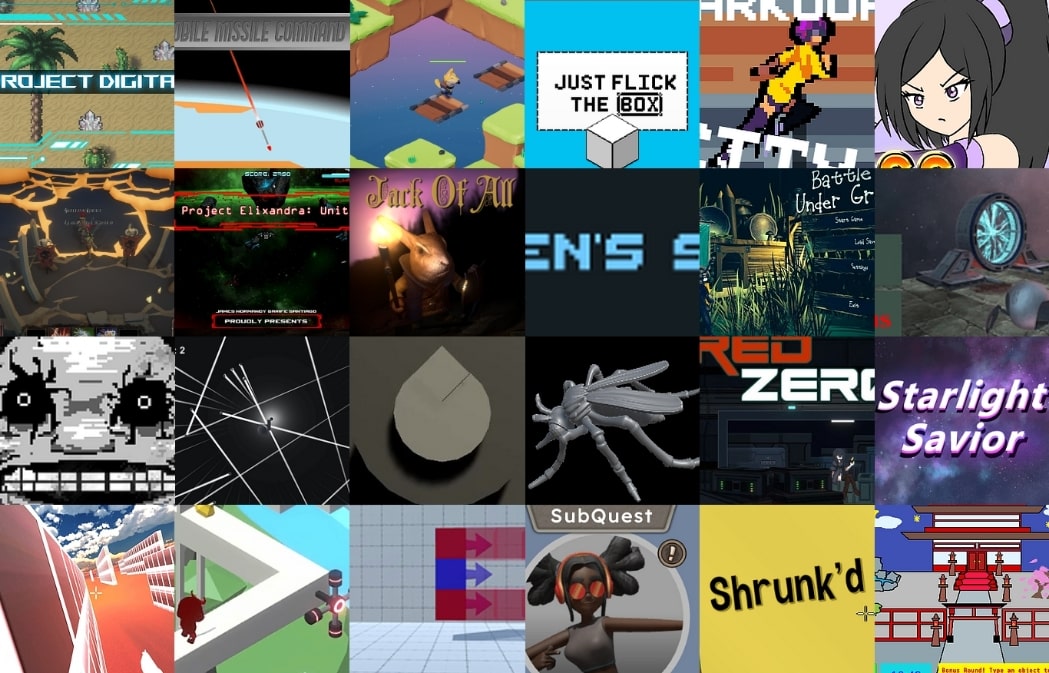
When players remember a game years later, they rarely remember the code. They remember the world.
The foggy ruins they stepped into.
The character whose silhouette they recognised instantly.
The colour of the sky before a boss fight.
That emotional memory is shaped by a Video Game Artist.
Not someone who just “makes art,” but someone who designs visuals that guide, support, and amplify gameplay.
What a Video Game Artist Really Does
A video game artist works inside constraints. Real-time engines. Performance limits. Gameplay clarity. Their job is not to create isolated beauty, but to create visuals that work while being played.
This includes:
- Characters that are readable in motion
- Environments that guide players without arrows
- Props that communicate interaction instantly
- Lighting that sets the mood and supports navigation
- Visual consistency across an entire world
Every artistic decision affects how the game feels to play.
A clear example from real games
Look at the Elden Ring.
Its environments are breathtaking, but more importantly, they’re readable. From a distance, players can identify landmarks, danger zones, and points of interest. The art doesn’t overwhelm. It invites exploration while quietly guiding movement.
Or take Hollow Knight.
The art style is simple, but incredibly deliberate. Strong silhouettes, controlled colour palettes, and clear contrast ensure enemies and platforms are readable even in fast combat. That’s why the game feels fair even when it’s difficult.
These games succeed because their video game artists understood one thing:
Visuals must support player decision-making.
Where beginners usually misunderstand the role
Many aspiring video game artists focus only on polish.
- High-resolution textures.
- Extreme detail.
- Cinematic lighting everywhere.
In production, that approach often backfires.
Over-detailed assets hurt performance. Busy visuals confuse players. Inconsistent styles break immersion.
Professional video game artists think differently. They ask:
- Will this read clearly during gameplay?
- Does this asset support the core loop?
- Can this be reused or optimised?
- How does this fit the overall visual language?
Art that doesn’t serve gameplay gets cut, no matter how good it looks.
The skills that actually matter
To grow as a video game artist, you’re really developing:
- Strong fundamentals (form, value, composition)
- Understanding of real-time engines
- Awareness of scale, camera, and movement
- Ability to work with designers and developers
- Discipline to simplify instead of overdesign
Style evolves. Fundamentals decide longevity.
Why structured learning helps here
Self-learning can take you far, but many artists hit a ceiling when they try to transition into games. They can create art, but not game-ready art.
Structured environments help artists learn:
- How assets behave inside engines
- How art decisions affect gameplay and performance
- How to receive and apply critique professionally
- How to build portfolios that studios understand
You stop thinking like an illustrator and start thinking like a production artist.
How MAGES supports aspiring Video Game Artists
At MAGES Institute, video game art is taught with production reality in mind. Students learn to design characters, environments, and assets that function inside real pipelines, not just in portfolios.
Projects emphasise clarity, usability, and iteration. Feedback focuses on how art supports gameplay, not just how it looks.
The goal is not one impressive piece.
It’s a repeatable, professional skill.
The takeaway
A video game artist doesn’t just decorate a game.
They shape how players move, feel, and remember it.
If you want to create worlds players want to stay in, not just screenshots people scroll past, then learning video game art properly matters.
And if you’re ready to build that mindset with structure, feedback, and industry context, exploring how MAGES Institute trains video game artists is a solid next step.
Because in games, art isn’t optional.
It’s experiential.