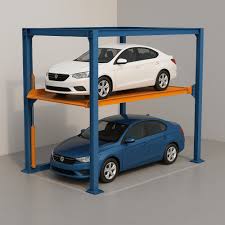
Urban spaces are shrinking while the number of vehicles continues to rise every year. This imbalance has created daily parking stress for homeowners, offices, malls, and residential societies. Traditional parking layouts waste valuable land and time. As cities grow vertically, parking solutions must follow the same path. This shift has led to advanced parking concepts that focus on efficiency, space optimization, and convenience.
What Is Stack Parking
Stack parking is a mechanical or semi-automated method that allows cars to be parked vertically rather than horizontally. Instead of occupying large surface areas, vehicles are placed on platforms that lift or slide cars into stacked positions. This approach makes better use of limited space, especially in high-density areas. It has become popular in cities where parking land is expensive and scarce.
Understanding the Stack Parking System
A stack parking system uses mechanical structures like lifts, pallets, and steel frames to park multiple cars in the space usually required for one or two vehicles. Cars are arranged in layers, either above or beside each other. The system can be manual, semi-automatic, or fully automated depending on site needs, budget, and traffic flow.
Why Cities Are Adopting Vertical Parking
Rapid urbanization has pushed cities to rethink infrastructure planning. Parking consumes a large portion of usable land, which could otherwise support green spaces or commercial use. Vertical parking solutions reduce ground coverage while increasing capacity. This makes them ideal for metro cities, business districts, and crowded residential areas where land availability is limited and vehicle ownership is high.
Key Benefits of Stack Car Parking
One major benefit of stack car parking system is efficient land utilization. It allows more vehicles to be parked without expanding the parking footprint. It also improves traffic movement within parking areas and reduces time spent searching for a spot. In many cases, it enhances safety by minimizing human error and reducing vehicle congestion in tight spaces.
Stack Parking for Residential Buildings
Residential societies often struggle with limited parking slots, leading to disputes and inconvenience. Stack parking provides a structured solution by doubling or tripling parking capacity without structural expansion. It is especially useful for apartments, gated communities, and villas with multiple vehicles. Residents benefit from organized parking and better use of basement or stilt areas.
Commercial Spaces and Parking Efficiency
Commercial buildings like offices, malls, and hospitals experience heavy parking demand throughout the day. Stack parking helps manage peak hours efficiently by accommodating more vehicles in a controlled space. It also supports better circulation, reducing entry and exit delays. For businesses, this means improved visitor experience and reduced parking chaos during busy periods.
Stack Parking in Urban Infrastructure
Modern urban infrastructure increasingly includes smart parking solutions as part of city planning. Stack parking fits well into this vision by supporting compact design and reduced land dependency. It complements mixed-use developments where parking must coexist with retail, offices, and residences. This approach aligns with sustainable urban development and long-term space planning goals.
Types of Stack Parking Configurations
There are several configurations available depending on space and usage. These include two-level stack parking, puzzle systems, and multi-level automated designs. Each configuration serves a specific requirement, whether for small residential buildings or large commercial complexes. Choosing the right setup depends on vehicle volume, space dimensions, and expected traffic flow.
Automated vs Semi-Automated Systems
Automated stack parking systems rely on minimal human intervention, using sensors and control panels to move vehicles. Semi-automated systems require basic user input but still reduce manual effort. Automated options are ideal for high-traffic locations, while semi-automated solutions suit smaller properties. Both options significantly improve parking efficiency compared to conventional methods.
Safety Features in Stack Parking
Safety is a critical aspect of any parking solution. Stack parking systems are designed with locking mechanisms, overload protection, emergency stops, and anti-fall devices. These features ensure vehicles remain secure during lifting and lowering operations. Proper installation and routine checks further enhance safety, making these systems reliable for daily use.
Space Optimization and Cost Efficiency
By maximizing vertical space, stack parking reduces the need for additional land acquisition. This makes it a cost-effective solution in high-value urban areas. While the initial setup may involve investment, long-term benefits include better space utilization and reduced construction costs. Over time, it proves economical compared to expanding traditional parking layouts.
Stack Parking and Sustainable Development
Sustainable development focuses on efficient resource use, and parking infrastructure plays a role in this goal. Stack parking minimizes land consumption and reduces the need for large concrete surfaces. This helps maintain better drainage and lowers environmental impact. When integrated into modern buildings, it supports eco-friendly urban design principles.
Parking Challenges in Metro Cities
Metro cities face constant parking shortages due to population growth and vehicle density. Roadsides and open plots are often misused for parking, causing traffic congestion. Stack parking addresses these challenges by creating structured parking zones. It helps reclaim public spaces and improves overall traffic management in busy urban neighborhoods.
Ease of Use for Daily Commuters
Daily commuters value parking solutions that save time and reduce stress. Stack parking systems are designed for smooth operation with simple controls. Clear instructions and automated movements make the process user-friendly. This convenience is particularly beneficial in offices and residential complexes where people park and retrieve vehicles multiple times a day.
Maintenance and Longevity
Regular maintenance ensures the long-term performance of stack parking systems. These systems are built using durable materials that withstand daily use and weather conditions. With proper servicing, they offer reliable operation for years. Compared to conventional parking structures, they require less space upkeep while delivering consistent performance.
Customization Based on Site Needs
Every site has unique space constraints and parking demands. Stack parking systems can be customized to fit specific layouts, ceiling heights, and vehicle types. This flexibility makes them suitable for a wide range of applications. Customized designs ensure optimal performance without compromising safety or convenience for users.
Stack Parking in Mixed-Use Developments
Mixed-use developments combine residential, commercial, and retail spaces in one location. Parking demand in such projects varies throughout the day. Stack parking helps manage this fluctuation by offering adaptable capacity. It ensures efficient use of space without requiring separate parking zones for different user groups.
Future of Parking Solutions
The future of parking lies in automation, smart controls, and space efficiency. Stack parking represents a shift toward intelligent infrastructure that supports growing urban populations. As technology advances, these systems will become more seamless and integrated. They are expected to play a key role in shaping next-generation cities and mobility solutions.
Choosing the Right Parking Approach
Selecting the right parking approach depends on space availability, vehicle volume, and long-term planning. Stack parking offers a balanced solution for modern needs without excessive land use. It suits both new developments and existing structures looking to upgrade parking capacity. Thoughtful planning ensures maximum benefit and smooth daily operation.
Parking challenges are no longer limited to crowded streets; they extend into residential and commercial spaces. Stack parking offers a practical and forward-looking solution by utilizing vertical space efficiently. It supports organized parking, better traffic flow, and sustainable development. As urban areas continue to grow, such smart parking systems will become increasingly essential.