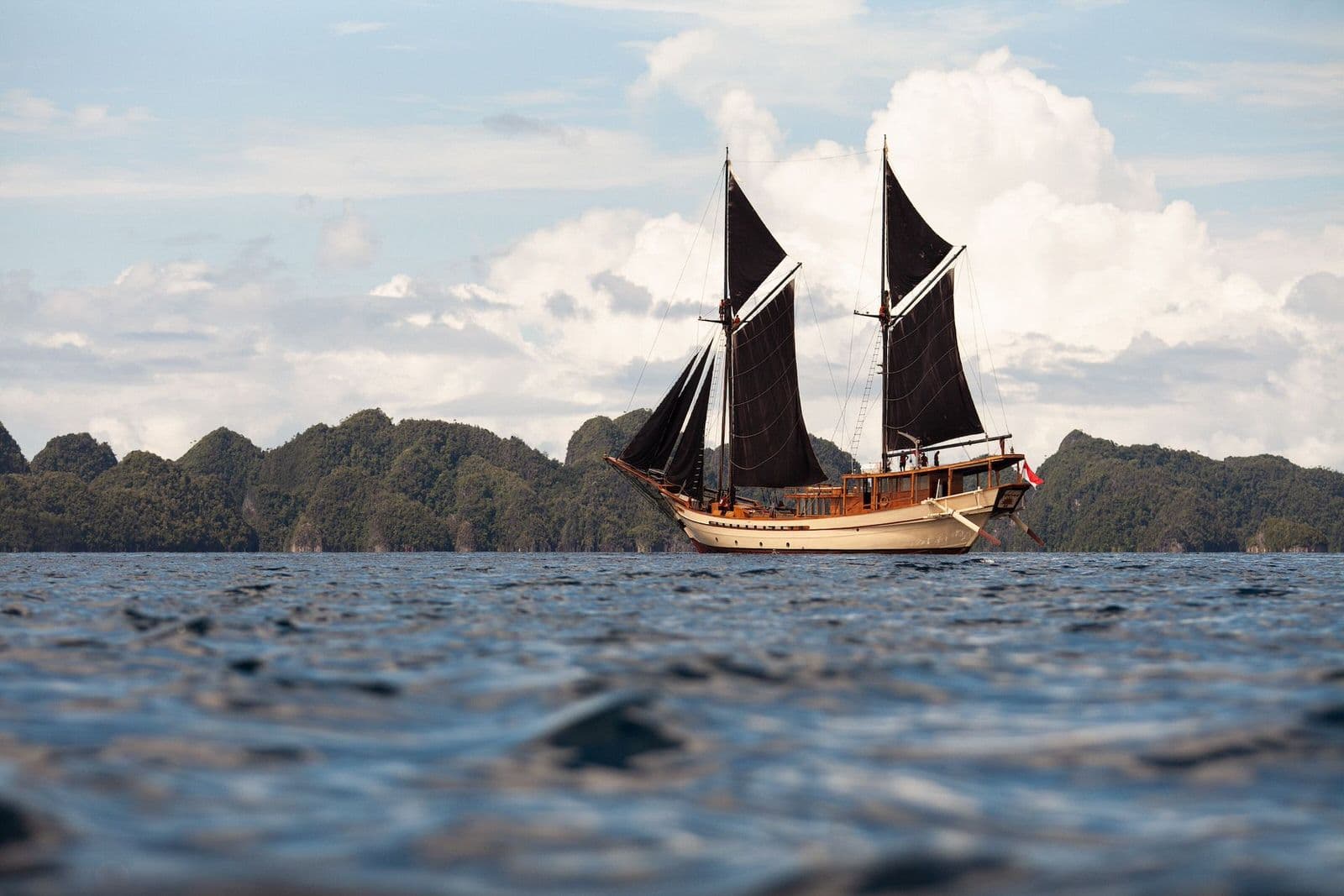
For centuries, the waters of the Indonesian archipelago have been home to master navigators who guided their wooden Phinisi ships across vast seas using only nature’s clues. While modern technology has revolutionized seafaring, the Silolona Liveaboard remains deeply connected to the traditions of ancient maritime explorers. Combining modern safety measures with centuries-old navigation techniques, Silolona’s crew continues to honor the art of traditional seafaring, ensuring a journey that is as authentic as it is extraordinary.
Reading the Wind and Waves
One of the fascinating skills still practiced aboard Silolona is the ability to read the wind and ocean swells. Traditional sailors, particularly the Bugis and Makassar seafarers, developed an acute understanding of how wind patterns shift with the seasons.
- Monsoon Winds: Navigators rely on monsoon winds, which dictate sailing routes. The southeast monsoon (April to October) brings dry weather and favorable sailing conditions, while the northwest monsoon (November to March) brings rain and rougher seas.
- Wave Refraction: Experienced sailors observe the direction and shape of ocean swells to determine approaching weather conditions and nearby landmasses.
- Sea Foam and Currents: The color and movement of sea foam indicate changing currents, helping sailors adjust their route accordingly.
Celestial Navigation: Following the Stars
Before GPS technology, Indonesian seafarers used the stars as their primary navigational tool. Onboard Silolona, these age-old methods are still honored.
- Orion and the Southern Cross: Sailors use the position of Orion’s Belt and the Southern Cross to establish cardinal directions. Navigators determine their latitude by measuring the angle between these constellations and the horizon.
- Moon Phases and Tides: The moon’s cycle influences the tides, and experienced sailors plan their voyages accordingly to take advantage of strong or gentle currents.
- Sun Positioning: The sun’s movement from east to west helps estimate time and maintain a straight course.
Using Natural Landmarks and Wildlife
In addition to celestial cues, Silolona’s crew uses natural landmarks and marine life as navigational aids.
- Island Silhouettes: Certain mountain peaks and coastal formations serve as markers to confirm proximity to land.
- Bird Migrations: The presence of seabirds, such as frigatebirds, indicates that land is nearby, as these birds rarely venture far from the coast.
- Dolphins and Fish Movements: The patterns of marine life often reveal underwater currents and warm or cold water zones, which influence sailing speed and direction.
Keeping Ancient Traditions Alive on Silolona
While modern navigation tools provide accuracy, Silolona’s crew deeply respects traditional methods, keeping these ancestral seafaring secrets alive. Guests aboard Silolona can witness these time-honored techniques firsthand, gaining a deeper appreciation for the skill and knowledge that shaped Indonesia’s maritime heritage.
Sailing on a a Silolona liveaboard is more than just a luxury experience—it’s a journey through history, where the ancient wisdom of the sea continues to guide adventurers across Indonesia’s breathtaking waters. For those seeking an immersive cultural voyage, there is no better way to explore the wondersarchipelago’s wonders than through the lens of its legendary seafarers.