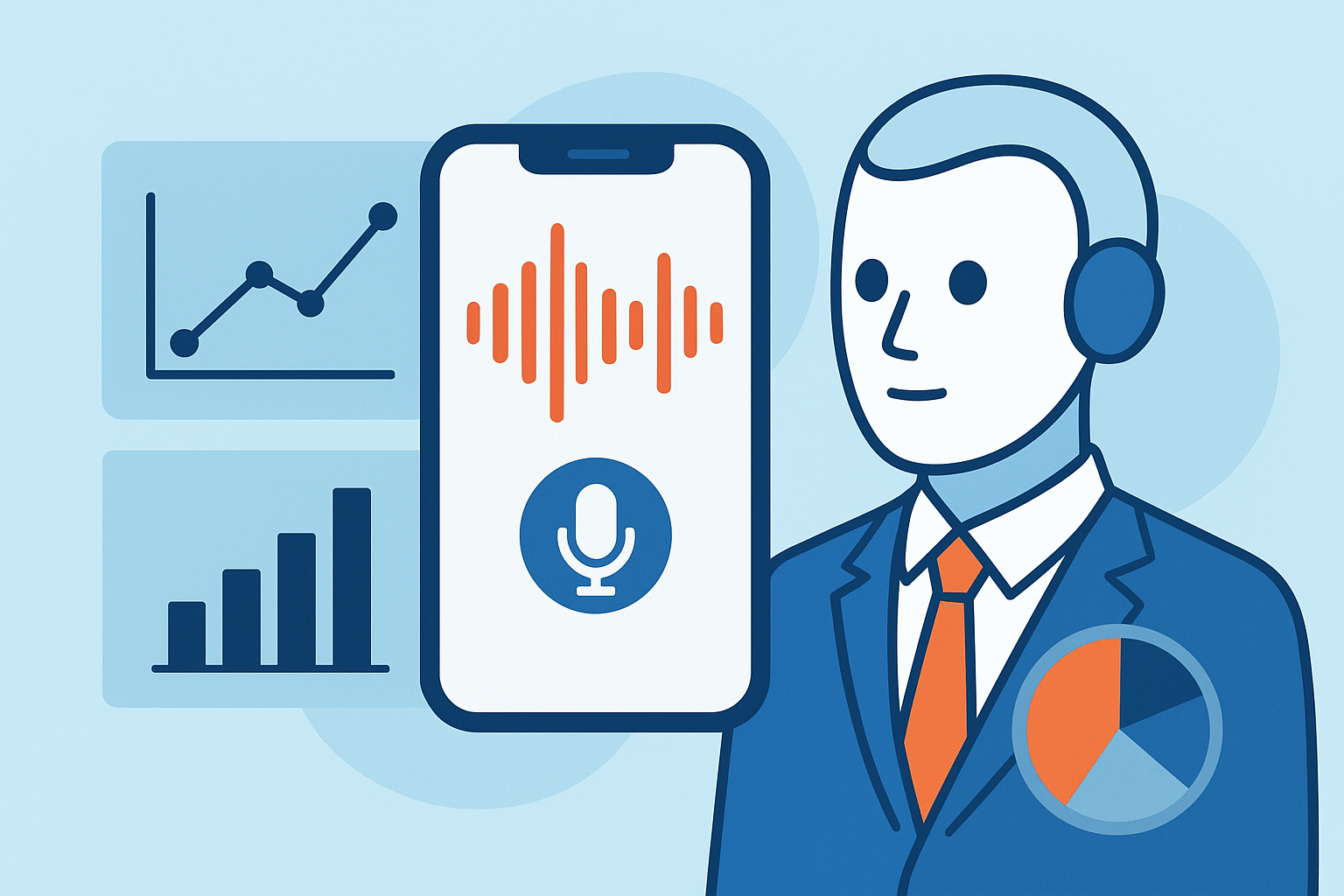
If you have ever worked in sales or managed a customer-facing team, you know that phone calls are where the real action happens.
I remember speaking with a real estate client who told me, “Our ads bring people in, but it’s the calls that actually decide whether we make money or not.”
He was right. A customer might click through five websites in an hour, but when they pick up the phone, that’s when they are serious.
The problem? Once the call ends, most businesses only have a record of the duration and the phone number.Everything else, like the questions, the tone of voice, the hesitation before saying “yes,” or the frustration in a complaint, just disappears.
That’s like throwing away a market research survey after the first page.
AI is changing this in a very practical way. It listens, processes, and turns those conversations into voice data insights you can actually use. Not just vanity metrics, but decisions that shape marketing, sales, and service.
Why Phone Calls Refuse to Die
It’s tempting to think that people have moved entirely to WhatsApp chats, chatbots, or quick DMs. But when decisions are important, people still want to talk to a human.
If you are buying a home, applying for a loan, or booking surgery, a chatbot isn’t enough. You need the reassurance of a real voice.
This is why calls are still critical. They carry stronger intent than clicks.
A form fill might just mean curiosity. A phone call almost always means urgency. That’s also why businesses that ignore what happens in their calls are leaving money on the table.
So What Does AI in Call Analytics Do?
For years, call tracking just told you which ad or number brought in the call. Useful, but limited. Now imagine being able to:
- Turn every conversation into text that can be searched and analyzed.
- Spot patterns in objections.
- Understand whether callers sounded happy, confused, or ready to walk away.
- See which salespeople consistently handle tough questions well and which ones need support.
- Predict which leads are most likely to convert based on how they spoke.
That’s what AI call analytics does. It doesn’t just collect calls. It understands them.
From Conversations to Insights You Can Use
Voice data insight helps businesses uncover what customers are really saying and feeling, turning ordinary phone conversations into powerful guidance for sales, marketing, and customer experience
The real question is: how does this help day-to-day business?
- If you are a marketer, it tells you which campaign didn’t just drive calls, but which campaign drove calls that actually turned into revenue.
- If you are in sales, it shows you why certain deals slip away. Maybe follow-ups are slow, maybe objections keep repeating, maybe agents aren’t asking the right questions.
- If you run operations, it helps you train teams with real examples instead of vague advice.
Think about it: your customers are already telling you what they want. AI simply helps you listen better.
The Edge AI in Call Tracking Creates
When you start analyzing every call, two things happen.
First, you stop making decisions in the dark.
Second, your customers feel like you actually get them.
That combination means higher conversions, better customer experiences, and smarter spending on marketing.
And in competitive industries, that can be the difference between growing steadily and constantly scrambling.
How to Implement AI in Call Analytics
It is one thing to understand the potential of AI in call analytics, and another to actually bring it into your business. The good news is that the process doesn’t have to be overwhelming.
Here is a simple roadmap you can follow:
- Start with clear goals: Before investing in any tool, decide what you want to achieve.
Are you looking to improve sales conversion rates, understand marketing ROI better, or strengthen customer service quality?
Having clarity at the start ensures you don’t get lost in endless data. - Choose the right platform: Look for a call management system that fits your industry and scale.
A real estate firm may need strong lead tracking, while a hospital will prioritize compliance and sentiment analysis.
The best platforms integrate seamlessly with your CRM or helpdesk so you are not working in silos. - Integrate call management system first: Begin by capturing the basics: which campaigns and numbers generate calls. This sets the foundation.
From there, layer on AI-driven features like transcription, keyword analysis, and sentiment detection. - Build feedback loops: Analytics is only useful if it feeds back into action.
Make sure your marketing team uses campaign insights, your sales team learns from missed opportunities, and your operations team applies findings to training. - Monitor compliance and privacy: Calls often contain sensitive information.
Ensure your setup complies with data protection rules and that customers are informed when calls are recorded. - Scale gradually: You don’t have to analyze every feature from day one. Start small, measure the impact, and expand once your team is comfortable.
This keeps adoption smooth and ensures quick wins that prove value early on.
When implemented thoughtfully, AI in call analytics doesn’t just provide reports. It becomes part of your decision-making rhythm, helping your team learn from every conversation and act with more confidence.
A Few Things to Watch Out For
Of course, this isn’t magic. Businesses have to take care of customer privacy and stay compliant with laws like GDPR or HIPAA.
Accuracy in transcription can still be tricky in markets with multiple languages and accents, though it is improving quickly.
And integration with CRMs or other tools takes some planning.
But these are solvable problems, and the benefits almost always outweigh the hurdles.
Where It’s Headed
Right now, most companies use AI to understand what happens in a call after it ends.
The next step is real-time support. Imagine your sales rep getting prompts while speaking to a customer: reminders about product features, suggestions on how to respond, or alerts about possible objections.
Beyond that, the future is about pulling everything together. Calls, chats, emails, and social messages will all feed into a single view of the customer.
That’s when businesses will really start making decisions with confidence.
Closing Thoughts
A phone call is never just small talk. It is a moment of truth between your business and a customer. AI call analytics ensures that the moment doesn’t go to waste.
Companies that embrace this shift are already learning faster, selling smarter, and serving customers better. Those who don’t will keep guessing while opportunities slip away.
The choice is simple. If you are investing in making the phone ring, invest in understanding what happens after you pick it up.