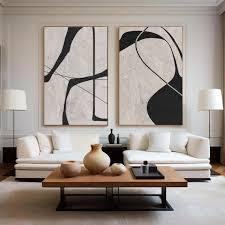
In the world of contemporary interior design, Wabi-Sabi abstract art has emerged as a unique and captivating form that invites viewers to slow down, appreciate simplicity, and find beauty in imperfection. Rooted in Japanese aesthetics, Wabi-Sabi celebrates the natural cycle of growth and decay, embracing the imperfect, the transient, and the incomplete. For modern interiors that lean toward minimalism or organic textures, Wabi-Sabi abstract art offers a serene focal point, blending subtle textures and earthy tones to create spaces of calm reflection.
A defining feature of Wabi-Sabi abstract art is its emphasis on natural materials and hand-crafted details. Many pieces are hand-painted, reflecting the artist’s personal touch, evident in every brushstroke and texture. Hand-painted Wabi-Sabi textured abstract artwork often incorporates a gentle horizontal horizon line, giving a sense of groundedness and balance to the composition. The soft, earthy layers evoke a quiet simplicity, allowing the artwork to harmonize effortlessly with minimalist furniture, muted color palettes, or interiors inspired by nature.
The Philosophy Behind Wabi-Sabi in Abstract Art
To understand Wabi-Sabi abstract art, it’s essential to explore the philosophy that underpins it. Wabi-Sabi is more than an aesthetic; it’s a worldview that values authenticity, imperfection, and impermanence. Unlike conventional art forms that strive for symmetry, polish, and perfection, Wabi-Sabi celebrates the raw, unfinished, and humble. In abstract art, this philosophy manifests as textured surfaces, irregular forms, and muted, earthy tones that echo the natural world.
The gentle horizontal horizon line often seen in Wabi-Sabi abstract art symbolizes balance and tranquility. It provides a subtle sense of orientation, grounding the viewer while allowing the mind to wander across layers of texture and color. These soft layers, often built with varying strokes and techniques, create depth and dimension without overwhelming the senses. The resulting artwork becomes a visual meditation, inviting introspection and a sense of quietude.
Characteristics of Wabi-Sabi Abstract Art
Several key characteristics define Wabi-Sabi abstract art, distinguishing it from other abstract or contemporary works:
- Hand-Painted Texture: Each piece carries the unique mark of the artist, with brushstrokes and layered paint creating a tactile quality that engages the viewer’s senses beyond the visual.
- Soft, Earthy Palette: Wabi-Sabi abstract art favors muted colors inspired by nature—soft browns, greys, ochres, and off-whites. These shades harmonize with natural materials such as wood, stone, and linen.
- Horizontal Horizon Line: Many pieces feature a gentle, almost imperceptible horizon line that adds structure while maintaining a relaxed and serene feel.
- Organic Layers and Imperfections: Subtle variations in texture, uneven edges, and irregular forms are embraced rather than hidden, highlighting the transient beauty of imperfection.
- Minimalist Composition: Space and restraint are as important as texture and color. Negative space allows the eye to rest and the mind to reflect, embodying the principle of simplicity.
Integrating Wabi-Sabi Abstract Art in Interiors
One of the remarkable qualities of Wabi-Sabi abstract art is its versatility in interior design. Its understated elegance allows it to complement a wide range of interior styles, particularly minimalist, Scandinavian, or organically inspired spaces. A hand-painted Wabi-Sabi textured abstract artwork can serve as a centerpiece in a living room, bedroom, or study, where its soft horizontal horizon line draws attention without dominating the space.
When pairing Wabi-Sabi abstract art with interior elements, consider natural textures and materials. Linen cushions, jute rugs, and reclaimed wood furniture enhance the organic essence of the artwork. The soft, earthy layers of the painting resonate with these elements, creating a cohesive and balanced environment. Additionally, the hand-crafted nature of Wabi-Sabi abstract art adds warmth and personality to interiors that might otherwise feel stark or overly clinical.
Emotional Impact of Wabi-Sabi Abstract Art
Beyond aesthetics, Wabi-Sabi abstract art has a profound emotional resonance. The philosophy behind Wabi-Sabi encourages viewers to embrace imperfection and transience, fostering mindfulness and acceptance. When displayed in a home or office, hand-painted Wabi-Sabi textured abstract artwork can evoke a sense of calm and serenity, helping to reduce stress and cultivate introspection.
The gentle horizontal horizon line contributes to this emotional impact, offering subtle guidance for the eyes and mind. Unlike bold, chaotic compositions that demand attention, Wabi-Sabi abstract art invites quiet contemplation. Each layer and texture encourages viewers to pause, notice details, and appreciate the beauty in imperfection—reminding us that life itself is a series of evolving, imperfect moments.
Collecting and Caring for Wabi-Sabi Abstract Art
Collectors and enthusiasts of Wabi-Sabi abstract art often seek pieces that reflect authenticity and craftsmanship. When acquiring a hand-painted Wabi-Sabi textured abstract artwork, it’s essential to consider the materials used, the artist’s technique, and the natural variations that make each piece unique. These imperfections are not flaws; they are the essence of Wabi-Sabi.
Caring for Wabi-Sabi abstract art requires minimal intervention. Avoid placing the artwork in direct sunlight, which can fade the soft, earthy layers. Dust lightly with a soft cloth, and avoid harsh chemicals that could damage the texture. The tactile nature of the painting means that even subtle changes in light and shadow can enhance its appearance, allowing the artwork to evolve and change over time, much like the philosophy it embodies.
Wabi-Sabi Abstract Art as a Lifestyle Statement
Embracing Wabi-Sabi abstract art is more than decorating a space—it’s a lifestyle choice. It signals a respect for authenticity, simplicity, and the natural flow of life. Homes adorned with hand-painted Wabi-Sabi textured abstract artwork often reflect a conscious effort to slow down, prioritize quality over quantity, and find joy in subtle, understated beauty.
This approach aligns perfectly with modern design trends that emphasize wellness, mindfulness, and connection to nature. By incorporating Wabi-Sabi abstract art, interiors become more than visually appealing—they become spaces that nurture the soul. The soft, earthy layers and gentle horizontal horizon line of the artwork create a visual rhythm that encourages relaxation and reflection, making everyday life feel more grounded and meaningful.
The Future of Wabi-Sabi Abstract Art
As interest in sustainable and mindful living grows, Wabi-Sabi abstract art is likely to gain further prominence. Its emphasis on hand-crafted quality, natural textures, and philosophical depth resonates with those seeking authenticity in a fast-paced world. Artists continue to experiment with new materials and techniques, pushing the boundaries of texture and abstraction while remaining true to the principles of Wabi-Sabi.
For interior designers, collectors, and art enthusiasts, Wabi-Sabi abstract art represents an opportunity to embrace imperfection while enhancing the aesthetic and emotional quality of living spaces. Each hand-painted piece is a unique story, layered with meaning and texture, capable of transforming ordinary rooms into havens of balance and quiet simplicity.
Conclusion
Wabi-Sabi abstract art offers a refreshing perspective in contemporary art and interior design. With its hand-painted textures, gentle horizontal horizon lines, and soft, earthy layers, it embodies balance, serenity, and understated beauty. More than just decoration, it encourages mindfulness, reflection, and an appreciation for imperfection—reminding us that true beauty often lies in what is modest, transient, and authentic.
Incorporating Wabi-Sabi abstract art into minimalist or organic interiors transforms spaces into tranquil retreats where art and philosophy coexist. Whether as a centerpiece in a living room, a calming addition to a bedroom, or a thoughtful accent in a study, hand-painted Wabi-Sabi textured abstract artwork enriches both the visual and emotional experience of any space. By celebrating imperfection and simplicity, it encourages us to slow down, notice the details, and find serenity in our everyday environments.
Embracing Wabi-Sabi abstract art is ultimately about more than aesthetics—it’s a conscious choice to live with authenticity, calm, and mindful appreciation for life’s natural rhythms.