
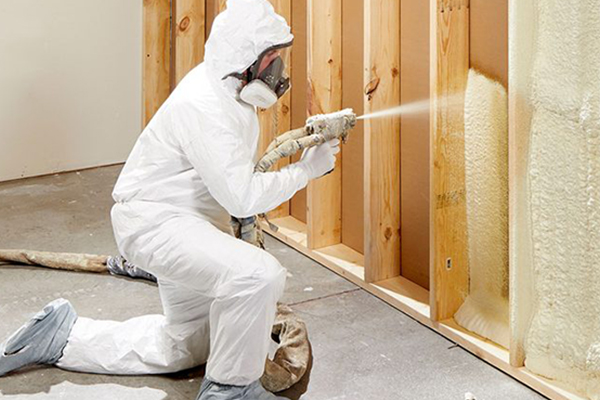
Closed-cell spray foam insulation delivers comfort without compromise by functioning as three essential building products in a single application. First, it provides a high-performance thermal barrier with one of the highest R-values per inch available, drastically slowing heat transfer. Second, its rigid, dense structure creates a complete and permanent air seal, stopping the drafts and air leaks that are a primary source of energy loss and discomfort. Finally, it acts as a non-permeable moisture barrier, blocking water and vapor from entering the building structure, which prevents mold growth and protects the home’s integrity.
This all-in-one approach is what sets closed-cell foam apart. It creates a total environmental separation between the interior and exterior, resulting in a home that is consistently comfortable, exceptionally energy-efficient, and structurally sound. Drawing on established building science, we can see how these powerful characteristics work together to provide a level of performance that is difficult to achieve with other insulation methods.
Maximum Thermal Performance
The first and most fundamental job of any insulation is to resist heat flow. Closed-cell spray foam insulation excels at this. It has a very high R-value, typically between R-6 and R-7 per inch of thickness. This is significantly higher than traditional insulation like fiberglass or cellulose, meaning it provides more insulating power in less space. For homeowners, this has two practical benefits.
In new construction or renovations with limited cavity depth, such as 2×4 walls or vaulted ceilings, closed-cell foam can help meet modern energy codes without having to build thicker walls. More importantly, this high thermal resistance means it is extremely effective at keeping heat inside during the winter and outside during the summer. This thermal stability reduces the demand on the home’s HVAC system, leading to lower energy bills and a more consistently comfortable temperature year-round.

A Rigid, Unyielding Air Barrier
While R-value is important, a building’s energy performance is often more dependent on its airtightness. Studies have shown that air leakage can account for a large portion of a home’s heating and cooling costs. This is where closed-cell foam’s rigid structure becomes a major advantage. When sprayed, it expands and then cures into a hard, dense material that fully adheres to the surrounding studs, sheathing, and any penetrations.
This process creates a monolithic air barrier that will not sag, settle, or shrink over time. It effectively seals the building envelope, stopping drafts and preventing the “stack effect,” where warm air escapes through the attic and cold air is pulled in through the basement. Beyond energy savings, this air seal also contributes to a healthier indoor environment by blocking the infiltration of dust, pollen, and other outdoor pollutants.
Bonus Tip: Because of its density and adhesive properties, closed-cell spray foam can also add structural racking strength to a wall assembly, making the building more resilient to high winds.
Complete Moisture and Vapor Control
One of the most powerful features of closed-cell spray foam is its ability to block moisture. Its cell structure is completely sealed, making it impermeable to both liquid water and water vapor. This allows it to function as an all-in-one insulator, air barrier, and vapor barrier. This is a critical feature for long-term comfort and building durability, as uncontrolled moisture is the root cause of mold, mildew, and rot.
When installed correctly, closed-cell foam prevents condensation from forming within wall and roof assemblies. It stops warm, humid indoor air from reaching the cold exterior sheathing in the winter, which is a common cause of hidden moisture problems.
Guidance for Damp Climates
In consistently wet climates like the Pacific Northwest, managing moisture from the ground up is essential. Closed-cell spray foam is an ideal solution for insulating crawl space walls and basement foundations. By applying it directly to the concrete, it creates a continuous barrier that stops ground moisture from wicking into the home, preventing the damp, musty conditions that are common in these areas. This not only makes the floors above warmer but also greatly improves the overall health of the home.
A Performance Comparison of Insulation Materials
Different insulation types offer different strengths. This table highlights why closed-cell spray foam is considered a high-performance, multi-functional product.
| Performance Metric | Closed-Cell Spray Foam | Open-Cell Spray Foam | Fiberglass Batts |
|---|---|---|---|
| R-Value (per inch) | High (R-6 to R-7) | Moderate (R-3.5 to R-3.8) | Moderate (R-3.1 to R-4.3) |
| Air Barrier | Excellent | Excellent | Poor |
| Vapor Barrier | Yes (Impermeable) | No (Permeable) | No (Requires separate barrier) |
| Structural Strength | Adds Rigidity | None | None |
| Water Resistance | Excellent | Poor | Poor |
Key Considerations and Ideal Applications
Closed-cell spray foam is a premium product, and understanding its ideal uses is key to a successful project.
The Right Application for the Job
Closed-cell foam’s unique properties make it the best choice for certain applications:
- Basements and Crawl Spaces: Its moisture resistance is unmatched for below-grade areas.
- Thin Wall Cavities: Its high R-value per inch allows you to maximize insulation in limited space.
- Areas Needing Rigidity: It can be used in situations where adding structural strength is a benefit.
- Unvented Attics: It is commonly used on the underside of the roof deck to create a conditioned attic space.
The Critical Need for Professional Installation
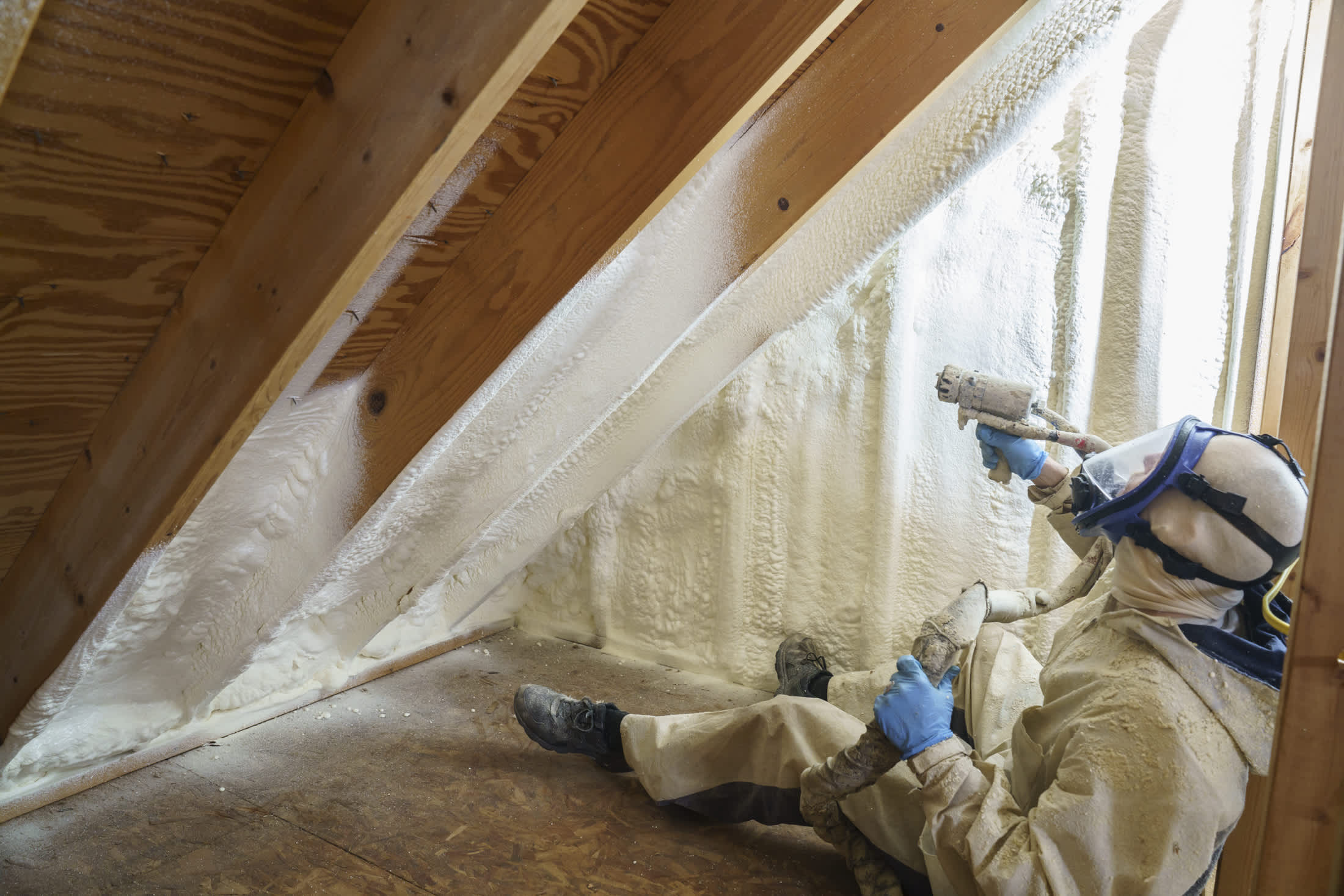
This is not a do-it-yourself product. The installation of spray foam is a chemical process that requires precise temperatures, pressures, and mixture ratios. Only certified, experienced professionals should handle the job. They have the proper training and personal protective equipment (PPE) to ensure the foam is applied safely and performs as expected.
Bonus Tip: When hiring an installer, ask to see their certification from an organization like the Spray Polyurethane Foam Alliance (SPFA). A reputable contractor will also be able to explain their ventilation plan and the required re-entry time after the job is complete.
Viewing It as a Long-Term Investment
The upfront cost of closed-cell spray foam is higher than many other insulation types. However, its longevity and multi-functional performance offer a compelling return on investment. The energy savings can be substantial, and by preventing moisture-related problems, it can save homeowners from thousands of dollars in future repair costs. Because it is a stable material that lasts for the life of the building, it is a one-time investment in uncompromising comfort and durability.
Key Questions About Closed Cell Foam
Does closed-cell foam trap moisture in a wall?
Because it is a vapor barrier, it must be used correctly within the building assembly. A building science professional can design a wall or roof system that ensures any moisture that does get in has a way to get out, preventing it from being trapped.
What is the blowing agent used in closed-cell foam?
Modern closed-cell foams use blowing agents that have a low Global Warming Potential (GWP). Manufacturers have phased out older agents in favor of more environmentally responsible hydrofluoroolefins (HFOs).
Can it be used to insulate a metal building?
Yes, it is an excellent choice for metal buildings. It adheres directly to the metal panels, creating a continuous air and moisture barrier that also prevents condensation from forming on the interior of the metal, which is a very common problem in these structures.
Is closed-cell foam flammable?
Spray foam insulation is required by building codes to be separated from the interior living space by a 15-minute thermal barrier, which is typically half-inch drywall. When properly covered, it does not pose an undue fire hazard.
How does it affect the resale value of a home?
A home insulated with high-performance closed-cell spray foam is often more attractive to buyers. The benefits of lower energy bills, increased comfort, and improved durability are strong selling points that can add to the home’s overall value.
The Ultimate in Home Performance
Closed-cell spray foam delivers comfort without compromise because it addresses all the major forces that make a home uncomfortable and inefficient: heat flow, air leakage, and moisture intrusion. By providing a single, durable solution to all three, it creates a living environment that is stable, healthy, and built to last. For homeowners who prioritize long-term performance, it represents one of the most effective upgrades available.
Finding Expert Guidance for Your Project
To determine if closed-cell spray foam is the right solution for your home, consulting with a certified insulation specialist is the best course of action. A thorough assessment can reveal the problem areas where this high-performance product would deliver the most benefit. For those looking for more specific guidance, a company with deep expertise in the field, such as Cascadia Spray Foam Insulation of Seattle, can be a valuable resource. Their team is available for inquiries by email at info@cascadiasprayfoam.com or by phone at (425) 386-3500.
Reviewer: Olivia Thompson has spent 10 years working in spray foam insulation, helping companies grow their visibility. She reviewed this article and provided valuable suggestions on how to better align the content with the needs and expectations of customers, ensuring it resonates with the target audience.
