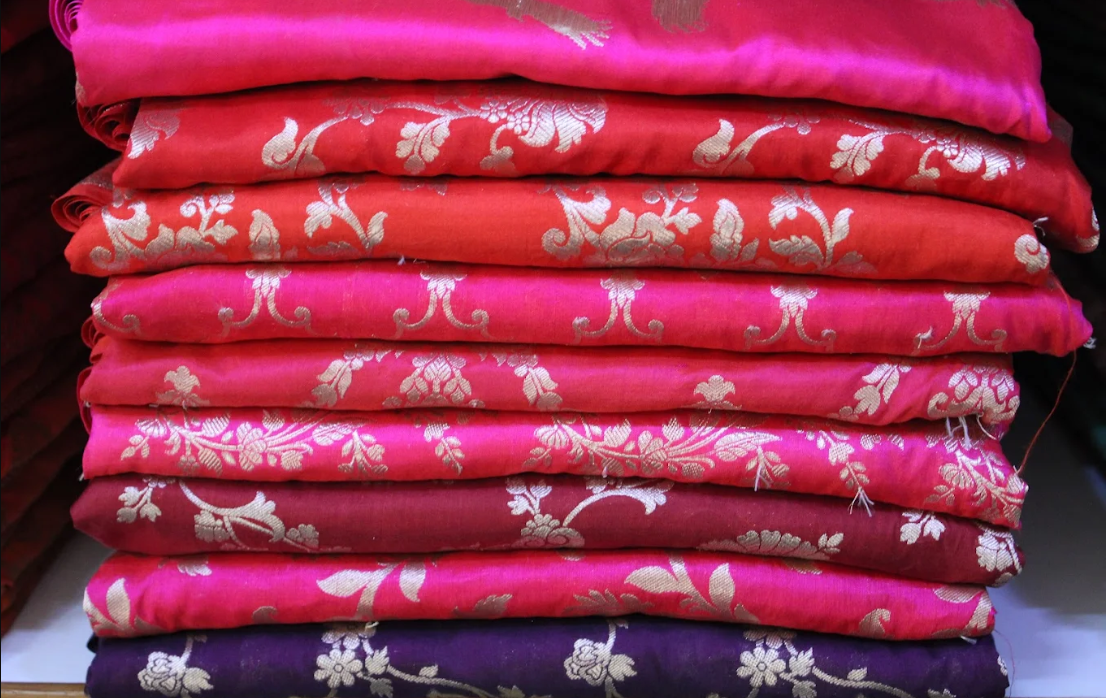
The Material Science of Banarasi Textile Preservation
Banarasi silk sarees represent significant investments in both craft labor and material quality. Improper cleaning causes irreversible damage: zari tarnishing, color bleeding, fabric weakening, and motif distortion. This guide provides documented protocols for home care based on textile preservation standards used by museums and archival institutions.
Understanding Fabric Vulnerability
Before any cleaning intervention, identify your saree’s specific risk factors:
Pure Silk Base Fabric
- Vulnerability: Protein fiber structure weakens when exposed to alkalis (soaps with pH above 8)
- Damage signs: Loss of luster, fabric thinning, increased brittleness
- pH requirement: Cleaning agents must remain between pH 5.5-7
Traditional Zari (Gold/Silver)
- Vulnerability: Oxidation accelerates with moisture and sulfur exposure
- Damage signs: Black tarnish spots, metallic thread separation from base fabric
- Protection requirement: Minimal water contact; immediate drying
Natural Dyes vs. Chemical Dyes
- Natural dyes (pre-1950s pieces): Water-sensitive, prone to bleeding
- Chemical dyes (modern pieces): More stable but still require cool water
- Test requirement: Color fastness test before full cleaning
Handloom Fabric Structure
- Vulnerability: Irregular thread tension (characteristic of handweaving) means uneven stress distribution when wet
- Damage signs: Pulled threads, motif distortion, border separation
- Handling requirement: Support entire fabric weight when wet; never wring or twist
Pre-Cleaning Assessment Protocol
Step 1: Stain Identification Document all stains with photos and notes:
- Oil-based (makeup, food): Require dry cleaning or careful spot treatment
- Water-based (perspiration, beverages): Can often be addressed with home cleaning
- Oxidation (yellowing, age spots): May require professional restoration
Step 2: Color Fastness Test Essential before any water contact:
- Select inconspicuous area (inner pleats or pallav underside)
- Dampen white cotton cloth with cool water
- Press firmly against saree fabric for 30 seconds
- Check for color transfer to white cloth
Result interpretation:
- No transfer = Safe to proceed with water cleaning
- Slight transfer = Professional cleaning recommended
- Heavy transfer = Dry cleaning only
Step 3: Zari Assessment Examine metallic threads under bright light:
- Intact threads with minor tarnish = Home cleaning possible with precautions
- Loose or separating threads = Handle minimally; professional conservation needed
- Heavy oxidation = Requires specialized metal restoration
Home Cleaning Protocol: Gentle Hand Wash Method
Required Materials:
- pH-neutral silk detergent or baby shampoo (pH 5.5-7)
- Large clean basin or bathtub (minimum 15-liter capacity)
- White cotton towels (minimum 3)
- Distilled water (if tap water is hard)
- Soft-bristle brush (optional, for stubborn spots)
- Ambient temperature water (20-25°C / 68-77°F)
Step-by-Step Process:
Step 1: Preparation
- Clear large flat surface for drying (minimum 6×3 feet)
- Lay white towel on surface
- Fill basin with cool water (never hot—damages protein fibers)
- Add 1 tablespoon detergent per 10 liters water
- Agitate water to dissolve completely
Step 2: Submersion
- Gently lower saree into water (avoid bunching)
- Allow fabric to absorb water naturally (2-3 minutes)
- Lightly press fabric underwater (never scrub or agitate)
- Let soak: 5-10 minutes maximum
Critical warning: Extended soaking (15+ minutes) weakens silk fibers and increases zari oxidation risk.
Step 3: Spot Treatment (if necessary) For localized stains:
- Apply diluted detergent directly to stain
- Use soft brush in gentle circular motion
- Work from stain edges toward center (prevents spreading)
- Rinse immediately with clean water
Step 4: Rinsing
- Drain soapy water
- Refill basin with clean cool water
- Submerge saree and agitate gently
- Repeat 2-3 times until water runs clear
- Final rinse: Add 1 tablespoon white vinegar per 10 liters (neutralizes soap residue, restores pH)
Step 5: Water Removal NEVER WRING OR TWIST.
Proper method:
- Lift saree from water, supporting entire weight
- Lay flat on clean white towel
- Roll towel and saree together (like a yoga mat)
- Apply gentle pressure to absorb water
- Unroll and transfer to dry towel
- Repeat if still very wet
Step 6: Drying
- Lay saree flat on dry white towel
- Spread fabric to prevent wrinkles
- Position away from direct sunlight (UV degrades silk)
- Ensure good air circulation
- Flip saree every 2-3 hours for even drying
- Drying time: 6-12 hours depending on humidity
Never use:
- Clotheslines (causes stress marks at fold points)
- Direct heat (radiators, hair dryers)
- Tumble dryers (catastrophic fabric damage)
Dry Cleaning Alternative
For Banarasi silk sarees with:
- Heavy zari work (40%+ metallic content)
- Unstable dyes (color transfer in fastness test)
- Antique pieces (pre-1960)
- Significant stains
Professional Cleaning Requirements: Request “gentle cycle” dry cleaning with:
- Hydrocarbon solvent (not perchloroethylene—too harsh for zari)
- No steam pressing (use hand pressing only)
- Specific instruction: “Handloom Banarasi saree in Varanasi style—contains metallic threads”
Cost expectation: ₹800-2,000 depending on saree complexity and regional rates.
Post-Cleaning Pressing Protocol
Equipment:
- Iron with temperature control
- White cotton pressing cloth
- Ironing board or padded flat surface
Method:
- Set iron to “silk” setting (maximum 150°C)
- Ensure saree is completely dry (damp fabric + heat = irreversible damage)
- Place white pressing cloth over saree section
- Press with firm, steady motion (no back-and-forth rubbing)
- Never iron directly on zari (causes flattening and tarnish)
- For heavily embellished areas: press from reverse side only
Test first: Always test iron temperature on inconspicuous area (inner border).
Storage Protocols for Handloom Fabric Preservation
Improper storage causes more damage than wearing and cleaning combined.
Short-Term Storage (1-3 months):
- Fold saree along natural fabric grain (not against motifs)
- Place white cotton or muslin cloth between folds (prevents zari transfer marks)
- Store in breathable cotton bag (never plastic—traps moisture)
- Position flat in drawer or shelf (no hanging—causes stress elongation)
- Add silica gel packets if humidity exceeds 60%
Long-Term Storage (6+ months):
- Refold every 3 months to prevent permanent creases
- Rotate fold lines to distribute stress
- Avoid cedar or mothballs (sulfur content accelerates zari tarnish)
- Use unscented neem leaves as natural pest deterrent
- Store in cool, dark location (temperature: 18-22°C, humidity: 45-55%)
Never:
- Store in direct sunlight (UV causes irreversible fading in 6-12 months)
- Use plastic bags or covers (moisture accumulation promotes mildew)
- Stack heavy items on top (creates permanent compression marks)
- Store in attics or basements (temperature/humidity fluctuations)
Emergency Stain Treatment Guide
Oil-Based Stains (Makeup, Cooking Oil):
- Blot immediately with clean white cloth (never rub)
- Apply cornstarch or talcum powder to absorb oil
- Let sit 2-4 hours
- Brush off gently
- If stain persists: professional cleaning required
Water-Based Stains (Wine, Juice):
- Blot immediately
- Dilute with cool water
- Apply small amount of diluted detergent
- Rinse thoroughly
- Proceed with full cleaning protocol
Perspiration:
- Rinse affected area with cool water immediately after wearing
- Never let perspiration dry on fabric (causes permanent yellowing)
- Full wash within 24 hours of wearing
Ink/Dye Transfer: Professional restoration required—home treatment often worsens stain.
Preventive Care: Wearing Guidelines
Before Wearing:
- Apply deodorant/perfume 10 minutes before draping (allows products to dry completely)
- Wear silk underskirt to absorb perspiration
- Remove jewelry that might snag fabric (sharp edges, rough stones)
During Wear:
- Avoid sitting for extended periods (causes permanent creases in heavy silk)
- Keep away from food preparation areas (oil splatter)
- Minimize contact with rough surfaces
After Wearing:
- Air out for 2-3 hours before storing (allows moisture to evaporate)
- Check for stains immediately while fresh (easier to treat)
- Never store a worn saree without airing first
When to Seek Professional Conservation
Contact textile conservation specialist if:
- Fabric shows tears or holes (requires specialized weaving repair)
- Zari threads separating from base fabric (needs re-anchoring)
- Extensive yellowing or age spots (requires chemical treatment)
- Moth damage visible (needs fumigation and restoration)
- Antique piece with historical value (museum-grade care warranted)
Finding qualified professionals: Search for “textile conservator” or “heritage saree restoration” in major cities. Expect costs of ₹5,000-₹25,000 depending on damage extent.
Frequency Guidelines
Washing frequency:
- After every wear if exposed to perspiration or food
- Every 2-3 wears for minimal contact occasions
- Annually for archived pieces (removes accumulated dust and environmental pollutants)
Professional cleaning:
- Every 3-5 years even with minimal wear (prevents accumulated oxidation)
- Immediately after significant staining
- Before long-term storage (6+ months)
Conclusion: Preservation as Respect for Craft
A Banarasi silk saree in Varanasi represents 15-30 days of skilled weaving labor. Proper care extends its lifespan from 20-30 years to 50+ years (potentially becoming a generational heirloom). The protocols above aren’t excessive—they’re proportional to the craft investment the textile represents.
Home cleaning is entirely viable for most modern Banarasi sarees when executed with material knowledge and patience. The key principle: when uncertain, err toward less intervention rather than more. Handloom fabric has survived centuries precisely because weavers and owners understood its material vulnerabilities and handled it accordingly.