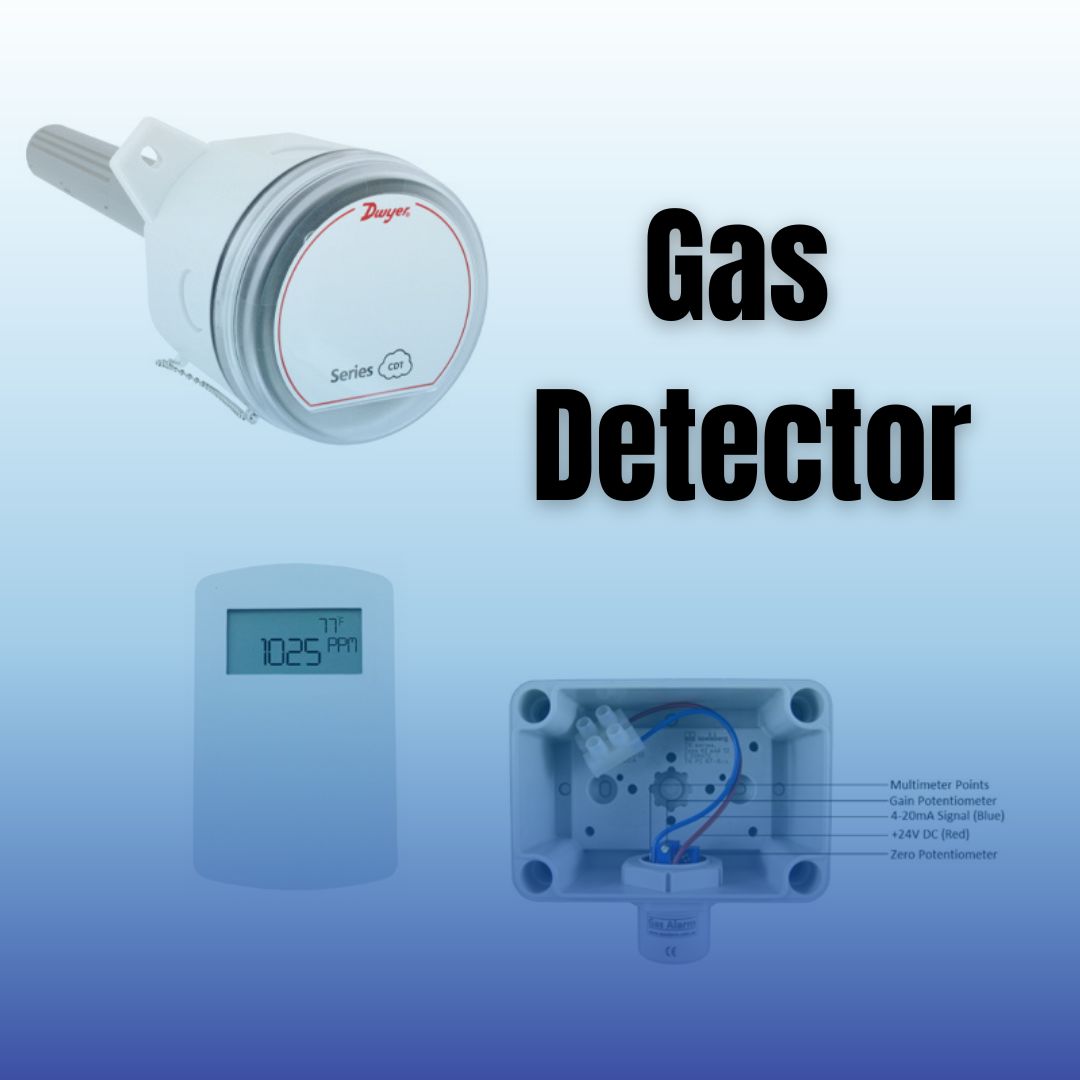
Safety in today’s leading industries isn’t as much a protocol as it is a science. One of the most important advancements is the development of a gas detector, a small but extremely potent tool that quietly “keeps an eye” in scenarios where human senses cannot. Its function has also transformed beyond simple alarm systems, and is now an intricate combination of sensors, algorithms, and data intelligence that keep both people safe as well as desks running.
Precision and Purpose in Detection
The technology of gas detection shifted from being mechanically simple to the high electronic standard. These systems are no longer based on just a chemical reaction or visual reading, but on sensor arrays that can detect specific gases in parts per million. Invisible dangers — carbon monoxide, methane, volatile organic compounds–they can sense them long before concentrations get dangerous. Today, detectors can decode this data into an action and fire alarms, ventilation systems or automatic safety shutdown.
From Reactive to Predictive Monitoring
Conventional detection systems were created to respond once a certain threshold is crossed. But today’s smart safety equipment is predictive. They study patterns over time so they can recognize environmental trends and, perhaps more importantly, early deviations that could help them detect leaks or other system malfunctions well before an accident occurs. Equipping them with the ability to seamlessly link up with industrial control systems, such sensors can be used for real-time detection and preventive maintenance so that safety management evolves from being merely a response of emergencies topasisakan become proactive risk reduction.
Digital Integration and Smart Connectivity
The emergence of the Internet of Things (IoT) has transformed the function of detection technology. Through wireless networks, sensors can easily communicate from one building to another and send information back up to a centralized dashboard or cloud platform. This integration supports remote management, automated reporting, and location-based alerts while in dangerous areas. This real-time visibility can be invaluable for high-risk industries such as chemical manufacturing or mining — it cuts down on manual intervention, enhances accuracy and enables faster decision-making in high-stakes situations.
The Science Behind Accurate Sensing
Today’s detection systems utilize different types of sensing technologies optimized for specific settings. Infrared sensors monitor varying degrees of light absorption, catalytic bead sensors record temperature changes in a gas during oxidation and electrochemical sensors measure ionic current variations due to interaction with the gas. Each type has specific advantages in terms of sensitivity, selectivity and environment sturdiness. These sensors’ AI-based calibration and temperature/humidity compensation ensure accuracy in complicated, changing environments.
Human Safety Meets Environmental Intelligence
It doesn’t just apply to human safety anymore, it also applies to environmental stewardship. Early detection of emissions and leaks allows industries to reduce atmospheric pollution in a timely manner, helping them stay in line with environmental regulations. Data generated such as that gathered by the monitoring systems are used in sustainability reporting and to drive resource efficiency. The synergy of safety intelligence and environmental intelligence is consistent with a global trend in industrial management, towards responsible and transparent operations.
The Place of Data in Decision Making
The development of detection has followed the increasing emphasis on data in operational strategy. Each sensor reading is part of a broader safety ecosystem, with predictive analytics analyzing historical patterns and pinpointing vulnerabilities. Anomaly detection is a use case for which the SA is particularly suitable, as it can predict leaks before they would occur, or even simulate leak scenarios to determine the best placement of a sensor. Using this data driven approach we achieve not only better safety, but also decrease down-time and costs for maintenance operations.
Future Innovations in Detection Systems
The fourth generation of monitoring instruments will be based mainly on AIs, nanotechnologies and wireless micro-sensors. Picture super-sensitive, battery-free sensors that are powered by light or vibration and that can track the cleanliness of the air in real time. These technologies will enable more miniaturized, sensitive, and stand-alone detection systems shutting down the human element in hostile environments. As with master grids, connected detection networks will form the basis of digital twins — virtual representations of physical estates that predict failure in advance.
In short — the gas detector: A safety, technology and innovation jackpot! Its quiet vigilance protects human life, the continuity of operations and environmental stewardship. And with the advancements in technology, detection will not simply be a safeguard; it’ll transition to a predictive intelligence system that can change the way industries approach risk, people protection, and business continuity in an ever-more automated world.